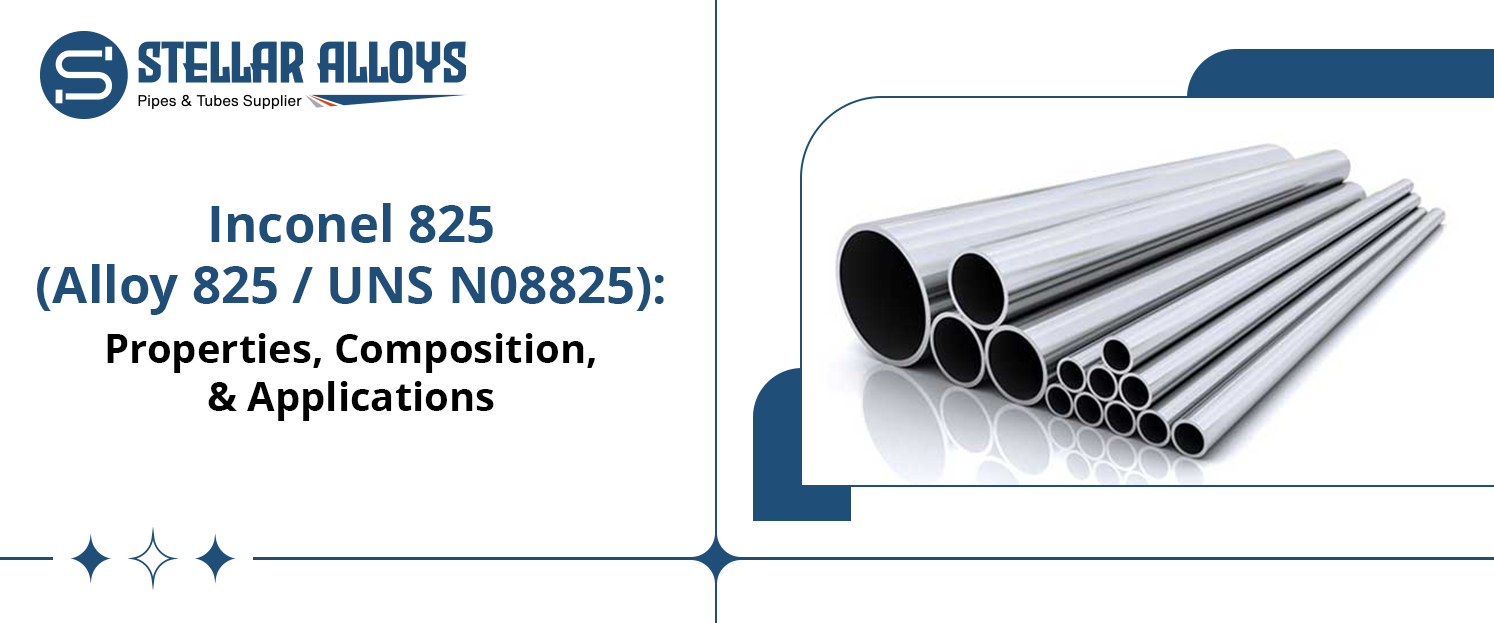
Inconel 825 (Alloy 825 / UNS N08825) is a high-performance nickel-iron-chromium alloy engineered for exceptional resistance to both reducing and oxidizing corrosive environments. Characterized by its unique additions of molybdenum, copper, and titanium, it serves as the premier solution for sulfuric acid processing, sour gas wells, and marine applications where chloride stress-corrosion cracking (SCC) is a constant threat.
Inconel 825 is a high-performance nickel-iron-chromium alloy characterized by its exceptional versatility in “mixed” corrosive environments. Developed as a more robust alternative to conventionalstainless steel, it includes significant additions of molybdenum, copper, and titanium. These elements create a stable austenitic structure that remains resilient when exposed to both oxidizing acids (like nitric acid) and reducing agents (like sulfuric or phosphoric acids).
Incoloy 825 vs. Inconel 825: Are they the same?
Yes. Although “Incoloy” is a trademarked name, the industry uses Inconel 825, Incoloy 825, and Alloy 825 interchangeably. Due to its high iron content, it is often a more cost-effective solution for large-scale infrastructure compared to othernickel alloy products, while still offering noble-metal corrosion resistance.
Inconel 825 Chemical Composition & Elemental Roles
The reliability of Alloy 825 in harsh environments is a direct result of its precise metallurgical makeup. Each element serves a specific protective purpose:
Nickel: The primary defense against chloride-ion stress-corrosion cracking.
Iron: Provides structural stability and cost-efficiency.
Chromium: Grants resistance to oxidizing chemicals.
Molybdenum: Essential for resisting localized pitting and crevice corrosion.
Copper: Enhances the alloy’s resistance to reducing acids, particularly sulfuric acid.
Titanium: Acts as a stabilizer to prevent intergranular corrosion during welding.
Mechanical & Physical Properties
Engineers specify Alloy 825 not only for its chemistry but for its reliable physical performance. It features a high Tensile Strength of at least 585 MPa (85 ksi) and a Yield Strength of 241 MPa (35 ksi).
Physically, the material has a Density of 8.14 g/cm³ (0.294 lb/in³) and a Melting Range between 1370–1400°C (2500–2550°F). To determine the exact requirements for your next project, you can use ourweight calculator for specific dimensions.
Key Advantages of Alloy 825
Superior Sulfuric Acid Resistance: The copper content allows 825 to withstand sulfuric acid across various concentrations.
Immunity to Chloride SCC: Its nickel level ensures durability in marine environments.
Weldability without Sensitization: Titanium stabilization keeps the heat-affected zone resistant to corrosion after welding.
Yes, it is easily welded using standard industrial techniques.
Conclusion
Inconel 825 remains a top-tier choice for chemical and offshore engineers who need a balance of acid resistance and cost-efficiency. Its unique ability to handle sulfuric acid and chloride SCC makes it indispensable in modern industrial infrastructure.
Are you looking for high-quality Inconel components?