
Stainless steel refers to an iron alloy that consists of at least 10.5 percent chromium that forms a passive surface coating which prevents corrosions and oxidations of the material. Other alloying elements including nickel, molybdenum, titanium or nitrogen are added depending on the requirements of the application to enhance mechanical strength, temperature performance and performance in a chemically aggressive or high-pressure environment. These features render stainless steel to be applicable in the area that needs to be durable, hygienic and a long service life.
The products of stainless steel provided to industries are pipes, tubes, plates, sheets, flanges, and fittings that are produced in various material grades and sizes. Stellar Alloys Steel Pipes and Tubes provides stainless steel products that are manufactured in compliance with the requirements of the ASTM and ASME to meet fabrication, processing, and project-based needs of various industries. Grades of the product range include 304 and 316 that are frequently specified, and higher alloy content including 317L and 904L to be used in corrosion resisting and marine usage.

Table of Contents
- Industrial Stainless Steel Products
- Stainless Steel Grades Overview
- Standard Specifications
- Chemical Composition Comparison (%)
- Mechanical Properties (Typical)
- Key Applications by Industry
- Surface Finishes
- Why Choose Stellar Alloys Steel Pipes and Tubes for Stainless Steel Products?
- Quality Assurance & Testing
- Stock Availability
- Frequently Asked Questions
Industrial Stainless Steel Products
The stainless-steel products of industry are required where the conditions of service require a level of controlled corrosion resistance, mechanical strength, and dimensional stability during long operating cycles. Stainless steel in industry use is based on grade chemistry, standards available in ASTM, and ability to withstand pressure, temperature, and exposure to chemicals instead of the overall availability.
Stellar Alloys Steel Pipes and Tubes deals with stainless steel products in industry that are applied in process piping, fabrication, and equipment construction. The product portfolio comprises stainless steel pipes and tubes used to transport fluids, heat exchangers and pressure systems, stainless steel plates and sheets used in fabrication, storage vessels, structural components, and industrial equipment. Such stainless steel products are provided in standard grades of 304, 316, and higher grades of alloy of 310, 317L, and 904L depending on the operating environment and corrosion.
Stainless steel 310 pipes are commonly used in high temperature service and stainless steel 317L pipes and stainless steel 904L pipes are used in services that are aggressive or where the environment contains chlorides. In the case of fabricated equipment and structural assemblies 304 and 304L stainless steel plates and sheets as well as 316L stainless steel plates and sheets are frequently used to ensure corrosion resistance, weldability, and consistency of grade across parts.
The material traceability and mill test certification and dimensional verification are provided on all industrial stainless-steel products to assist in the engineering approval, inspection requirements and long-term operational reliability.
Available Grades of Stainless Steel
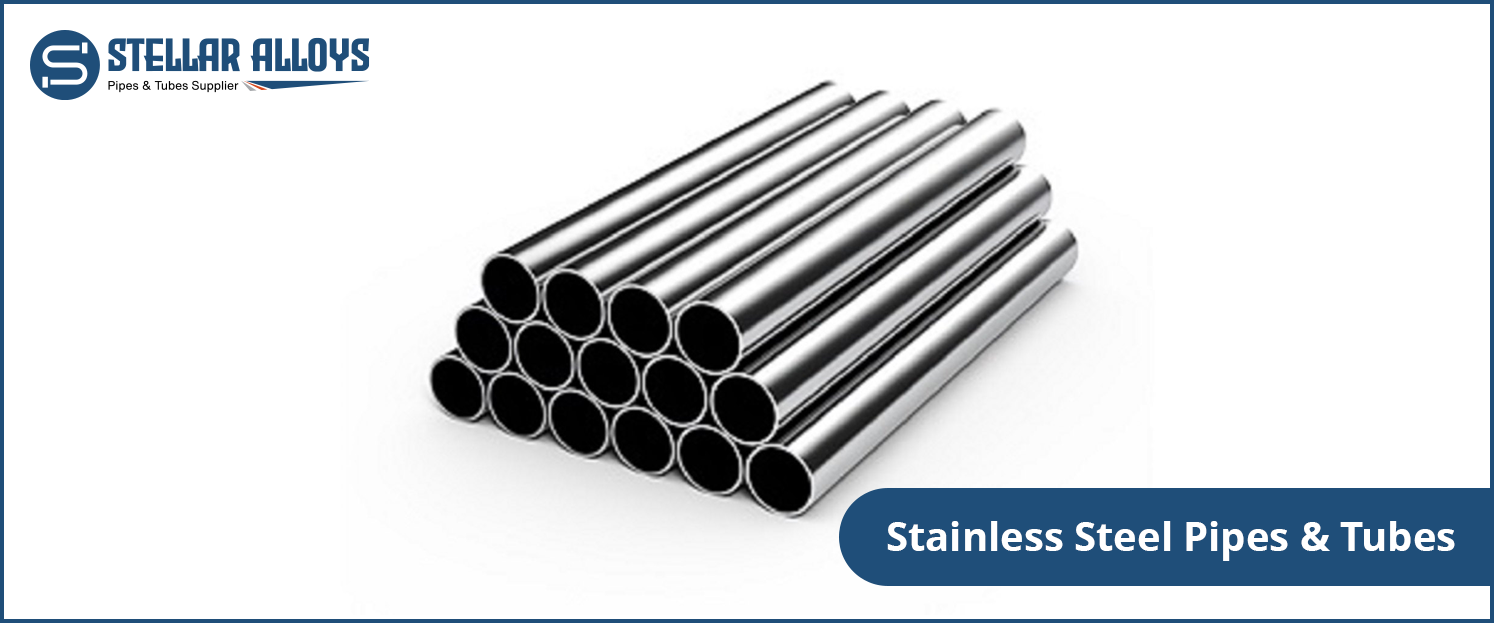
Stainless Steel Pipes & Tubes
Seamless and welded pipes in grades 304, 316, 310, 317L, and 904L.
View Pipes & Tubes →
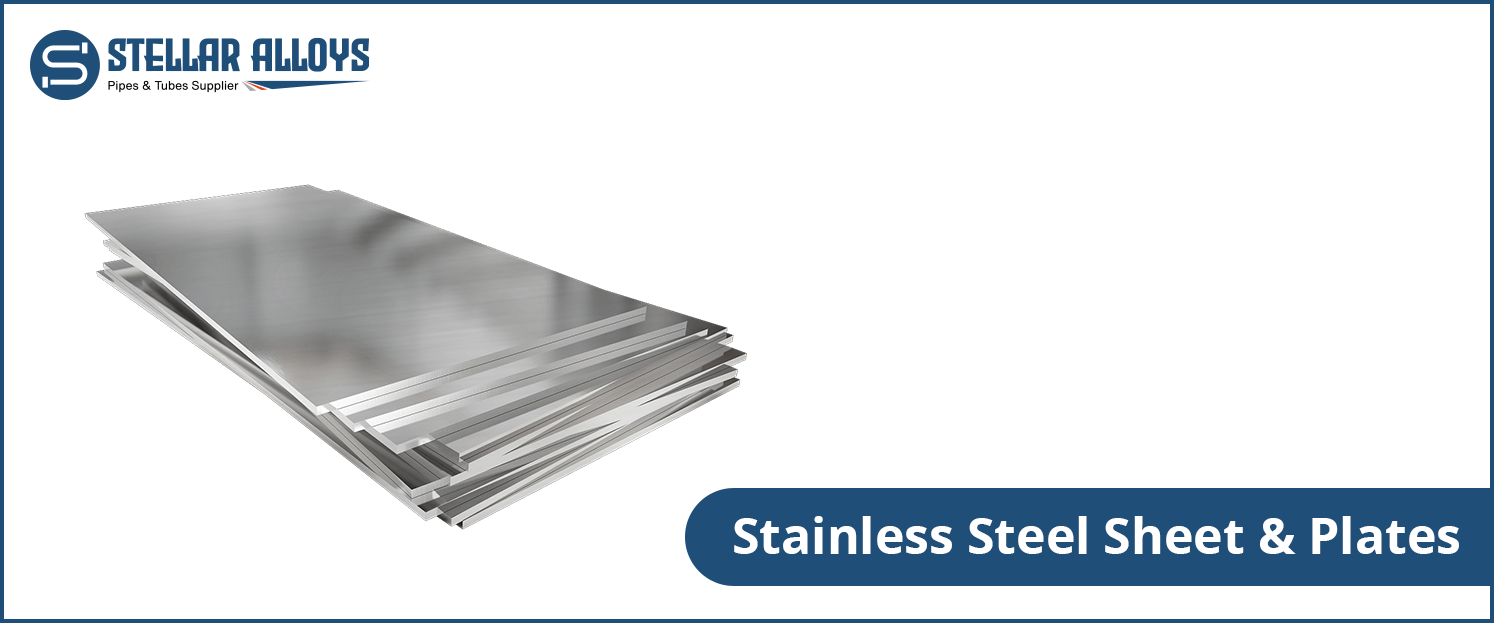
Stainless Steel Plates & Sheets
High-quality plates and sheets in various finishes and dimensions.
View Plates & Sheets →
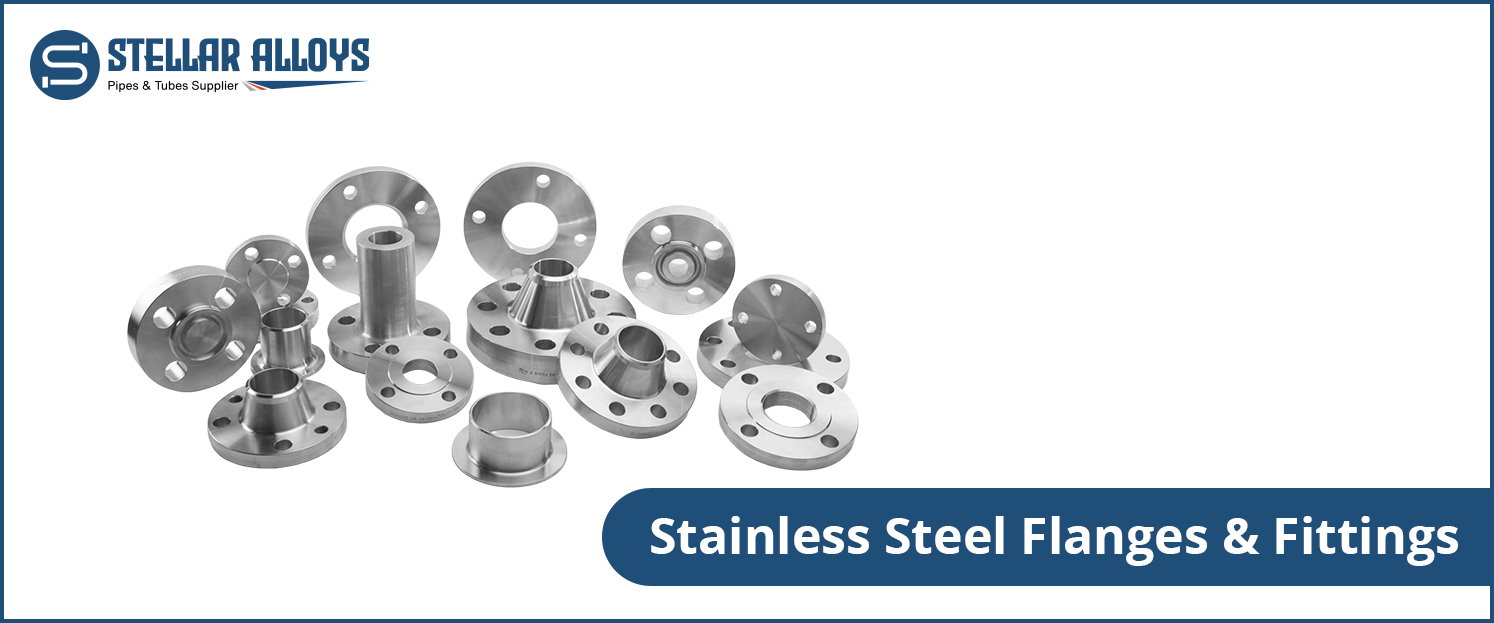
Stainless Steel Flanges & Fittings
Complete range of stainless steel flanges and pipe fittings.
View Fittings →
Stainless Steel Pipes & Tubes
We offer a complete range of stainless steel pipes and tubes designed for fluid transport, structural applications, and heat exchangers.
| Specification | Details |
|
Size Range |
Seamless: 1/2″ NB to 24″ NB Tubes: 6mm to 914mm OD |
|
Schedules |
SCH 5S, 10S, 40S, 80S, 160, XXS |
|
Standards |
ASTM A312, A213, A269, ASME SA312, SA213 |
|
Types |
Seamless, Welded, ERW, EFW |
|
Key Grades |
SS 304/304L, SS 316/316L, SS 310/310S, SS 317L, SS 904L |
Stainless Steel Plates & Sheets
Our inventory includes high-quality stainless steel plates, sheets, and coils suitable for fabrication, cladding, and architectural uses.
| Specification | Details |
|
Thickness |
0.3mm to 100mm |
|
Width |
1000mm, 1219mm, 1500mm, 2000mm, 2500mm |
|
Length |
2000mm, 2440mm, 3000mm, 6000mm (Custom cut available) |
|
Finish |
2B, BA, No.1, No.4, HL (Hairline), 8K Mirror |
|
Standards |
ASTM A240, ASME SA240 |
|
Key Grades |
SS 304/304L, SS 316/316L, SS 310S, SS 321, SS 904L |
Stainless Steel Flanges & Fittings
Precision-engineered flanges and fittings for leak-free connections in piping systems.
| Specification | Details |
|
Types |
Weld Neck, Slip-On, Blind, Socket Weld, Threaded, Lap Joint |
|
Standards |
ASME B16.5, B16.47, B16.9 |
|
Pressure Class |
150#, 300#, 600#, 900#, 1500# |
|
Fittings |
Elbows, Tees, Reducers, Caps, Stub Ends, Unions |
Stainless Steel Grades Overview
Grade | UNS No. | Key Features | Corrosion Resistance | Primary Applications |
304 / 304L | S30400 / S30403 | Most versatile, good formability, weldability. | Excellent in atmospheric and mild chemical environments. | Food processing, architectural, kitchen equipment. |
316 / 316L | S31600 / S31603 | Added molybdenum for better pitting resistance. | Superior to 304, excellent in chloride/marine environments. | Pharmaceutical, marine, chemical processing. |
310 / 310S | S31000 / S31008 | High chromium and nickel for high-temperature service. | Excellent oxidation resistance up to 1150°C. | Furnace parts, heat exchangers, kilns. |
317L | S31703 | Higher molybdenum than 316L for severe environments. | Enhanced resistance to pitting and crevice corrosion. | Pulp & paper, chemical, petrochemical. |
321 | S32100 | Titanium stabilized to prevent intergranular corrosion. | Similar to 304 but stable at higher temperatures. | Aircraft exhaust, expansion joints, heat exchangers. |
N08904 | Super-austenitic with high Ni and Mo content. | Exceptional resistance to sulfuric acid and chlorides. | Acid processing, cooling devices, pollution control. |
Standard Specifications
| Product Form | ASTM Standards |
| Pipes | ASTM A312, A213, A269, A376, A790 |
| Plates & Sheets | ASTM A240, A167 |
| Flanges | ASME B16.5, B16.47 |
| Fittings | ASTM A403, ASME B16.9, B16.11 |
| Bars & Rods | ASTM A276, A479 |
Chemical Composition Comparison (%)
| Grade | Cr | Ni | Mo | Mn | C (Max) |
| 304 | 18.0-20.0 | 8.0-10.5 | – | 2.0 | 0.08 |
| 316 | 16.0-18.0 | 10.0-14.0 | 2.0-3.0 | 2.0 | 0.08 |
| 310S | 24.0-26.0 | 19.0-22.0 | – | 2.0 | 0.08 |
| 317L | 18.0-20.0 | 11.0-15.0 | 3.0-4.0 | 2.0 | 0.03 |
| 904L | 19.0-23.0 | 23.0-28.0 | 4.0-5.0 | 2.0 | 0.02 |
Mechanical Properties (Typical)
Grade | Tensile Strength (min) | Yield Strength (min) | Elongation (%) | Hardness (Max HRB) |
304 / 304L | 515 MPa (75 ksi) | 205 MPa (30 ksi) | 40% | 92 |
316 / 316L | 515 MPa (75 ksi) | 205 MPa (30 ksi) | 40% | 95 |
515 MPa (75 ksi) | 205 MPa (30 ksi) | 40% | 95 | |
317L | 515 MPa (75 ksi) | 205 MPa (30 ksi) | 40% | 95 |
904L | 490 MPa (71 ksi) | 220 MPa (32 ksi) | 35% | 90 |
Key Applications by Industry
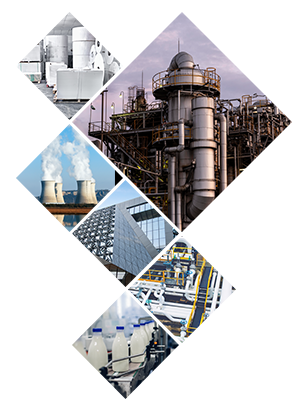
- Food & Beverage : Processing equipment, dairy tanks, brewing vats, and piping systems utilize 304/304L and 316/316L for their hygienic properties and ease of cleaning.
- Pharmaceutical : Cleanroom equipment, mixing vessels, and high-purity water piping require the superior surface finish and corrosion resistance of electropolished 316L.
- Chemical Processing : Storage tanks, reactors, heat exchangers, and process piping handling corrosive chemicals rely on 316L, 317L, and 904L grades.
- Architectural : Facades, handrails, street furniture, and decorative elements use 304 for indoor and 316 for outdoor/coastal applications to maintain aesthetics.
- Oil & Gas : Offshore platforms, subsea pipelines, and refinery equipment use robust stainless grades to withstand harsh marine environments and high pressures.
- Automotive : Exhaust systems, catalytic converters, trim, and structural components utilize ferritic and austenitic stainless steels for heat and corrosion resistance.
Surface Finishes
We offer a variety of surface finishes to meet aesthetic and functional requirements:
- 2B (Cold Rolled, Annealed, Pickled): Smooth, reflective grey sheen. Standard mill finish.
- BA (Bright Annealed): Highly reflective, mirror-like finish produced by annealing in a controlled atmosphere.
- No.4 (Brushed): Directional abrasive finish (150-180 grit), common for kitchen appliances and architectural use.
- HL (Hairline): Long, continuous abrasive lines, popular for architectural panels and elevators.
- 8K Mirror: Polished to a high degree of reflectivity, virtually scratch-free.
- No.1 (Hot Rolled, Annealed, Pickled): Rough, dull surface, used for industrial applications where aesthetics are secondary.
Why Choose Stellar Alloys Steel Pipes and Tubes for Stainless Steel Products?
Stellar Alloys Steel Pipes and Tubes is your premier partner for high-quality stainless steel solutions.
- Comprehensive Inventory: Extensive stock of pipes, plates, and bars in all major Inconel grades.
- Certified Quality: All materials come with Mill Test Certificates (EN 10204 3.1) and adhere to ASTM/ASME standards.
- Global Logistics: Fast shipping and export packaging to over 40 countries worldwide.
- Technical Expertise: Our metallurgists provide guidance on grade selection and fabrication.
- Custom Solutions: In-house cutting, beveling, and fabrication services to meet specific project needs.
Quality Assurance & Testing
We ensure product integrity through rigorous testing protocols:
- Positive Material Identification (PMI)
- Mechanical Testing (Tensile, Hardness)
- Intergranular Corrosion Test (ASTM A262 Practice E)
- Hydrostatic Testing
- Ultrasonic Testing (UT)
- Visual & Dimensional Inspection
- Third-party inspection (TPI) available
Stock Availability
We maintain ready stock of common sizes for immediate dispatch:
- 304/304L Stainless Steel Pipes, Plates, Sheets
- 316/316L Stainless Steel Seamless Pipes, Plates
- 310/310S Stainless Steel Heat Resistant Pipes, Plates
- 317L Stainless Steel Corrosion Resistant Pipes
- 904L Stainless Steel Pipes, Fittings
Frequently Asked Questions
Stainless steel is an iron alloy containing a minimum of 10.5% chromium. Depending on the grade, it may also contain nickel, molybdenum, manganese, and other elements to enhance specific properties like corrosion resistance and formability.
304 is the most common grade, offering good corrosion resistance. 316 contains molybdenum (2-3%), which significantly improves resistance to pitting and crevice corrosion, especially in chloride-rich environments like saltwater.
“Better” depends on the application. 304 is more cost-effective and sufficient for most indoor and general applications. 316 is superior for marine, chemical, and outdoor coastal environments due to its higher corrosion resistance.
Yes, under certain conditions. While highly resistant, stainless steel can rust if the passive oxide layer is damaged and cannot repair itself, often due to lack of oxygen, exposure to harsh chemicals (like chlorides), or contamination by carbon steel.
The “L” stands for “Low Carbon.” Grades like 304L and 316L have a maximum carbon content of 0.03%, which prevents carbide precipitation during welding, minimizing the risk of intergranular corrosion (weld decay).
It depends on the microstructure. Austenitic grades (300 series like 304, 316) are generally non-magnetic. Ferritic (400 series) and martensitic grades are magnetic. Cold working can sometimes induce slight magnetism in austenitic grades.
904L is a super-austenitic stainless steel with high nickel and molybdenum. It is used in severe corrosion environments, such as handling sulfuric acid, phosphoric acid, and seawater, where 316L would fail.
Warm water and mild soap are usually sufficient. For tougher stains, specialized stainless steel cleaners or a mixture of vinegar and olive oil can be used. Avoid abrasive pads (steel wool) and chloride-based cleaners (bleach).
Yes, most stainless steel grades are weldable. Austenitic grades (304, 316) are the most easily welded using common methods like TIG (GTAW) and MIG (GMAW). Low carbon “L” grades are preferred for welding to prevent corrosion
Austenitic steels (e.g., 304, 316) have a Face-Centered Cubic structure, are non-magnetic, and offer high formability and corrosion resistance. Ferritic steels (e.g., 430) have a Body-Centered Cubic structure, are magnetic, and generally have lower corrosion resistance but better stress corrosion cracking resistance.
Related Products
Ready to Order Stainless Steel Products?
Get a quote for premium Stainless Steel pipes, plates, and fittings today.
Email: vaman@stellaralloys.com | Phone: +91 8850508307