
Stellar Alloys Steel Pipes and Tubes is a leading Hastelloy products manufacturer/supplier as well as a world manufacturer of high-performance nickel-molybdenum-chromium superalloys for the most challenging industrial applications. Our product line includes seamless and welded hastelloy pipes & tubes, hastelloy plates & sheets, flanges, fittings, and round bars in high-quality grades of C276, C22, B2, B3, C4, X, and G30.

Our materials are vital in chemical processing, pollution control, the oil and gas industry, and pharmaceutical industries known for their high ability to resist corrosion of reducing and oxidising acids, stress corrosion cracking, and localised attack. We are a respected manufacturer and distributor of Hastelloy, and we guarantee all products are of high-quality standards that adhere to ASTM, ASME, and API, with our quality testing and global logistical support.
Table of Contents
- Introduction to Hastelloy Products
- Hastelloy Grades Overview
- Standard Specifications of Hastelloy Products
- Chemical Composition Comparison of Hastelloy Products(%)
- Mechanical Properties of Hastelloy Products
- Key Applications by Industry
- Corrosion Resistance Properties
- Why Choose Stellar Alloys Steel Pipes and Tubes for Hastelloy Products?
- Quality Assurance & Testing
- Stock Availability
- Frequently Asked Questions
Hastelloy Products Range
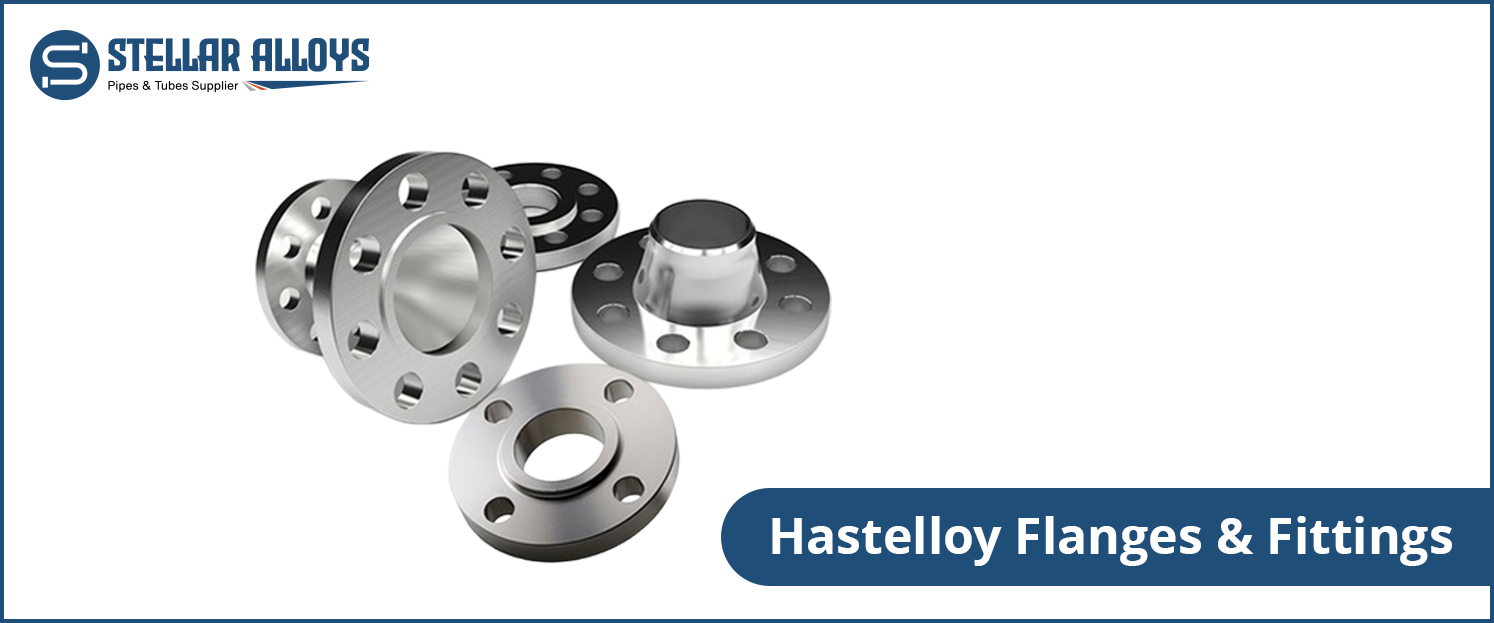
Hastelloy Flanges & Fittings
High-integrity flanges and fittings for critical piping systems.
View Fittings →
Introduction to Hastelloy Products
Hastelloy is a brand name of a series of high-performance nickel-based superalloys produced by Haynes International. They are mainly made of nickel, molybdenum and chromium and are designed to endure in the high-stress and high-corrosion conditions where less durable materials would have failed.
The main characteristic of the Hastelloy products is their incredible strength against serious chemical attack. They have near-complete resistance to stress corrosion cracking caused by chloride, and they have excellent resistance to both oxidising and reducing acids such as hydrochloric, sulphuric and acetic acids. This makes them the industry standard for chemical processing plants, pollution control and waste treatment facilities.
Stellar Alloys Steel Pipes and Tubes is an all-inclusive supplier of Hastelloy products, which act as a linking point between the high technology of metallurgy and the deployment of industrial products. Our assortment and variety of Hastelloy grades are immense: C-276, C-22, and B-Series.
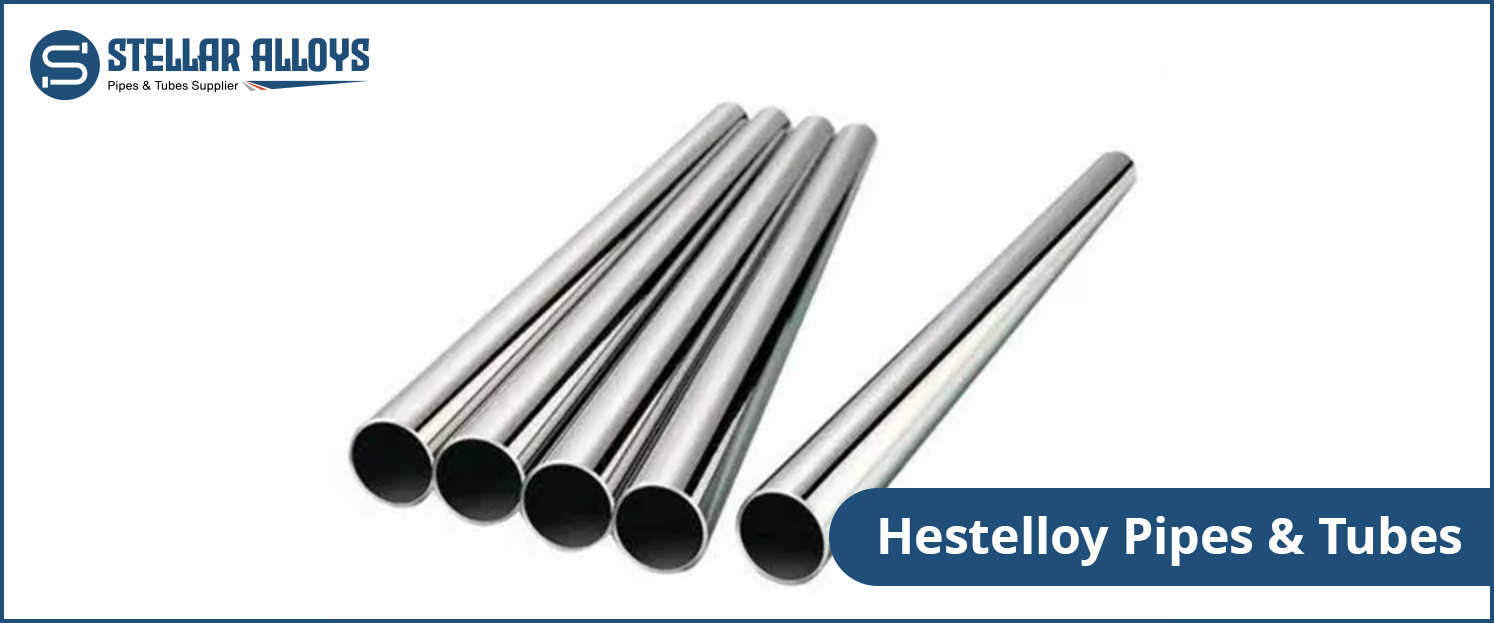
Specification of Hastelloy Pipes & Tubes
We offer a complete range of Hastelloy pipes and tubes designed for the transport of aggressive fluids in chemical and petrochemical plants.
| Specification | Details |
|
Size Range |
Seamless: 15 NB to 600 NB Tubes: 1mm OD to 254mm OD |
|
Schedules |
SCH 5S, 10S, 40S, 80S, 160, XXS |
|
Standards |
ASTM B622 (Seamless), ASTM B619 (Welded), ASTM B626 (Welded Tube) |
|
Types |
Seamless, Welded, ERW, EFW, CDW |
|
Key Grades |
Hastelloy C276, Hastelloy C22, Hastelloy B2, Hastelloy B3, Hastelloy X |
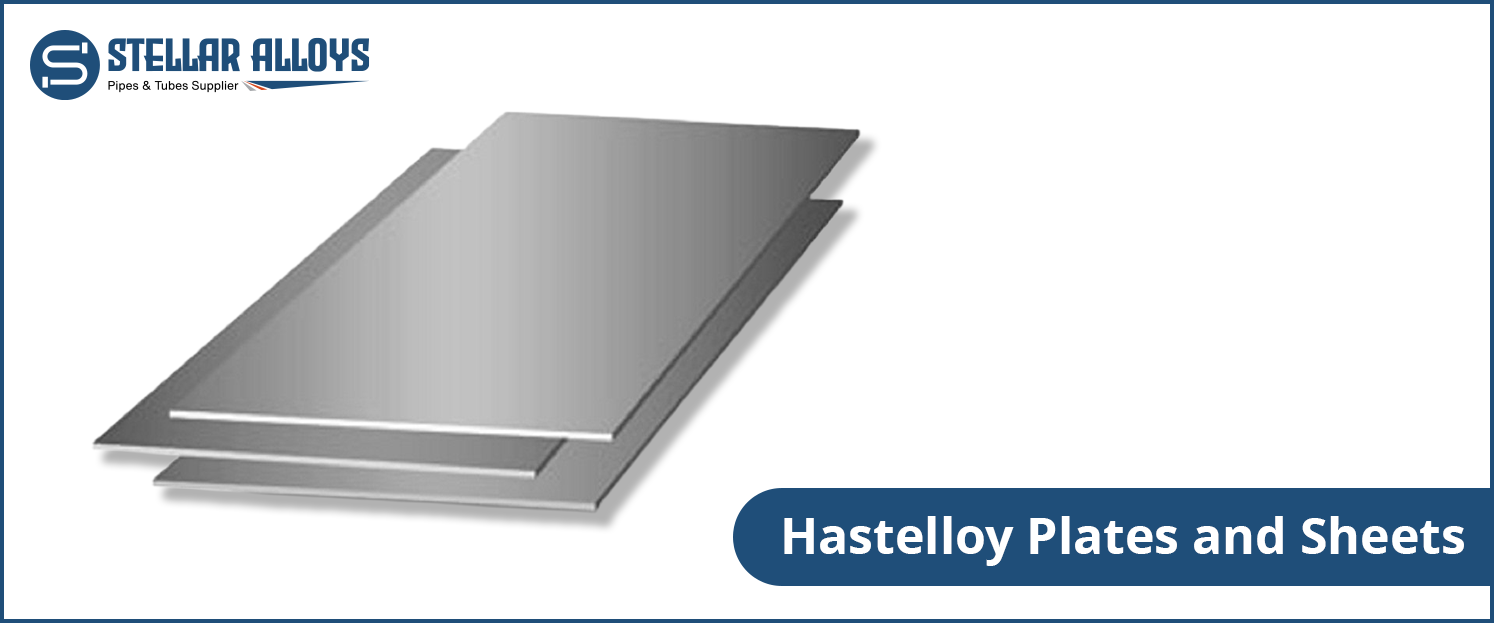
Specification of Hastelloy Plates & Sheets
Our inventory includes Hastelloy plates, sheets, and coils used for fabricating reactors, heat exchangers, and storage tanks.
| Specification | Details |
|
Thickness |
0.5mm to 100mm |
|
Width |
1000mm, 1219mm, 1500mm, 2000mm |
|
Length |
2000mm, 2440mm, 3000mm, 6000mm (Custom cut available) |
|
Finish |
2B, BA, No.4, Hairline, Mirror, Hot Rolled (HR) |
|
Standards |
ASTM B575, ASME SB575 |
|
Key Grades |
Hastelloy C276, Hastelloy C22 |
Specification of Hastelloy Flanges & Fittings
Robust flanges and fittings engineered to maintain system integrity in high-pressure and corrosive piping networks.
| Specification | Details |
|
Types |
Weld Neck, Slip-On, Blind, Socket Weld, Threaded, Lap Joint |
|
Standards |
ASME B16.5, B16.47, B16.9, ASTM B366 |
|
Pressure Class |
150#, 300#, 600#, 900#, 1500#, 2500# |
|
Fittings |
Elbows, Tees, Reducers, Caps, Stub Ends, Unions |
Hastelloy Grades Overview
Grade | UNS No. | Key Features | Primary Applications |
Hastelloy C276 | N10276 | The premier corrosion-resistant alloy. Exceptional performance in reducing and oxidizing environments. | Chemical processing, pollution control, pulp & paper. |
Hastelloy C22 | N06022 | Better overall corrosion resistance than C276, especially in oxidizing environments (wet chlorine, nitric acid). | Pharmaceutical, agrochemical, flue gas desulfurization. |
Hastelloy B2 | N10665 | Superior resistance to hydrochloric acid at all concentrations and temperatures. | Production of HCl, acetic acid, alkylation. |
Hastelloy B3 | N10675 | Similar to B2 but with improved thermal stability and ease of fabrication. | Reaction vessels for reducing acids. |
Hastelloy X | N06002 | High-temperature strength combined with oxidation resistance. | Gas turbine engines, petrochemical furnaces. |
Hastelloy C4 | N06455 | Excellent high-temperature stability and resistance to stress-corrosion cracking. | Chemical process equipment. |
Standard Specifications of Hastelloy Products
Product Form | ASTM Standards | ASME Standards |
Pipes (Seamless) | ASTM B622 | ASME SB622 |
Pipes (Welded) | ASTM B619, B626 | ASME SB619, SB626 |
Plates, Sheets & Strips | ASTM B575 | ASME SB575 |
Bars & Rods | ASTM B574 | ASME SB574 |
Fittings | ASTM B366 | ASME SB366 |
Forgings | ASTM B564 | ASME SB564 |
Chemical Composition Comparison of Hastelloy Products(%)
Mechanical Properties of Hastelloy Products
Grade | Tensile Strength (min) | Yield Strength (min) | Elongation (%) | Hardness |
C276 | 690 MPa (100 ksi) | 283 MPa (41 ksi) | 40% | 100 HRB |
C22 | 690 MPa (100 ksi) | 310 MPa (45 ksi) | 45% | 100 HRB |
B2 | 760 MPa (110 ksi) | 350 MPa (51 ksi) | 40% | 210 HV |
B3 | 760 MPa (110 ksi) | 350 MPa (51 ksi) | 40% | 100 HRB |
X | 655 MPa (95 ksi) | 240 MPa (35 ksi) | 35% | 90 HRB |
Key Applications by Industry
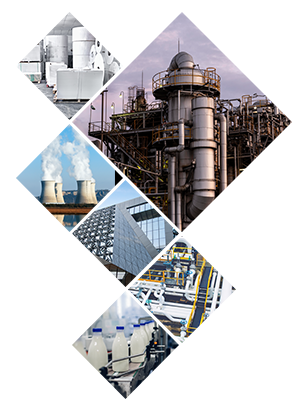
- Chemical Processing : Reactors, heat exchangers, distillation columns, and piping for handling acetic acid, sulfuric acid, and hydrochloric acid. Hastelloy C276 is the standard workhorse.
- Pollution Control : Flue gas desulfurization (FGD) systems, scrubbers, stack liners, and ducts. Hastelloy C276 and C22 withstand the corrosive slurry and acidic gases.
- Oil & Gas : Downhole production tubing and wellhead equipment in deep sour gas wells containing high levels of H2S, CO2, and chlorides.
- Pharmaceutical : Reaction vessels and transfer piping where product purity is paramount, and equipment must withstand corrosive solvents and cleaning agents.
- Waste Treatment : Evaporators, crystallizers, and incinerator components used in the treatment of industrial and municipal waste streams.
- Pulp & Paper : Bleach plant washers, digesters, and paper mill equipment exposed to oxidizing chlorine dioxide and bleaching chemicals.
Corrosion Resistance Properties
Hastelloy alloys are renowned for their ability to resist specific corrosive mechanisms:
- Reducing Acids: Hastelloy B2 and B3 offer excellent resistance to hydrochloric acid at all concentrations and temperatures, as well as sulfuric, acetic, and phosphoric acids.
- Oxidizing Environments: Hastelloy C22 provides superior resistance to oxidizing acid chlorides, wet chlorine, formic and acetic acids, ferric and cupric chlorides.
- Localized Corrosion: The high molybdenum content in C-series alloys renders them virtually immune to pitting and crevice corrosion in severe chloride environments.
- Stress Corrosion Cracking: All Hastelloy grades offer exceptional resistance to chloride stress corrosion cracking, a common failure mode for stainless steels.
Why Choose Stellar Alloys Steel Pipes and Tubes for Hastelloy Products?
Stellar Alloys Steel Pipes and Tubes is your dedicated partner for high-nickel alloy solutions.
- Comprehensive Inventory: Extensive stock of pipes, plates, and fittings in grades C276, C22, and B2 ready for immediate dispatch.
- Certified Quality: Materials sourced from reputable mills with full EN 10204 3.1 certification and traceability.
- Global Logistics: Expertise in exporting to over 40 countries with professional packaging and documentation.
- Rigorous Testing: We ensure material integrity through mandatory PMI testing, ultrasonic testing, and hydrostatic testing.
- Technical Support: Our team assists with material selection to ensure cost-effective performance in your specific environment.
Quality Assurance & Testing
We uphold the highest standards of quality control:
- Positive Material Identification (PMI) – 100% check
- Intergranular Corrosion Test (ASTM G28)
- Ultrasonic Testing (UT) for internal defects
- Hydrostatic Testing for pipes
- Mechanical Testing (Tensile, Yield, Elongation)
- Hardness Testing
- Dimensional Inspection
- Third-party Inspection (TPI) availability
Stock Availability
We maintain a strategic inventory of common sizes:
- Hastelloy C276 Seamless Pipes (1/2″ to 8″), Plates (3mm to 25mm)
- Hastelloy C22 Seamless Pipes, Sheets, Fittings
- Hastelloy B2 Welded Pipes, Round Bars
- Hastelloy B3 Process Piping, Custom Fittings
- Hastelloy X High-temp Sheets, Bars
Frequently Asked Questions
Hastelloy is used in severe industrial environments involving strong acids (hydrochloric, sulfuric), chlorides, and high temperatures. Common applications include chemical reactors, pollution control scrubbers, and sour gas well components.
Hastelloy C276 is the industry standard for general corrosion resistance. Hastelloy C22 contains more chromium (20-22% vs 15-17%), giving it superior resistance to oxidizing environments like wet chlorine and nitric acid mixtures, while retaining resistance to reducing acids.
Yes, Hastelloy alloys are designed to be weldable using gas tungsten arc welding (GTAW) and gas metal arc welding (GMAW). They have low carbon content to minimize carbide precipitation during welding, maintaining corrosion resistance in the heat-affected zone.
“Better” depends on the application. Inconel is generally superior for high-temperature oxidation resistance. Hastelloy offers superior corrosion resistance in severe wet chemical environments, particularly those containing acids and chlorides.
Both are nickel-molybdenum alloys designed for hydrochloric acid resistance. Hastelloy B3 is an upgraded version of B2 with a chemical composition designed to provide better thermal stability, making it easier to fabricate and less susceptible to embrittlement during welding.
No, Hastelloy alloys are non-magnetic. This property is useful in applications where magnetic interference must be minimized.
The cost is driven by the high percentage of expensive alloying elements like Nickel and Molybdenum, as well as the specialized processing required to melt and work these superalloys.
The high nickel content provides resistance to reducing environments and stress corrosion cracking. Molybdenum provides resistance to pitting and crevice corrosion. Chromium (in C-series) provides resistance to oxidizing media.
Related Products
Ready to Order Hastelloy Products?
Get a quote for premium Hastelloy C276, C22, and B2 materials today.
Email: vaman@stellaralloys.com | Phone: +91 8850508307