
Titanium vs Stainless Steel Pipe: Which is Stronger?
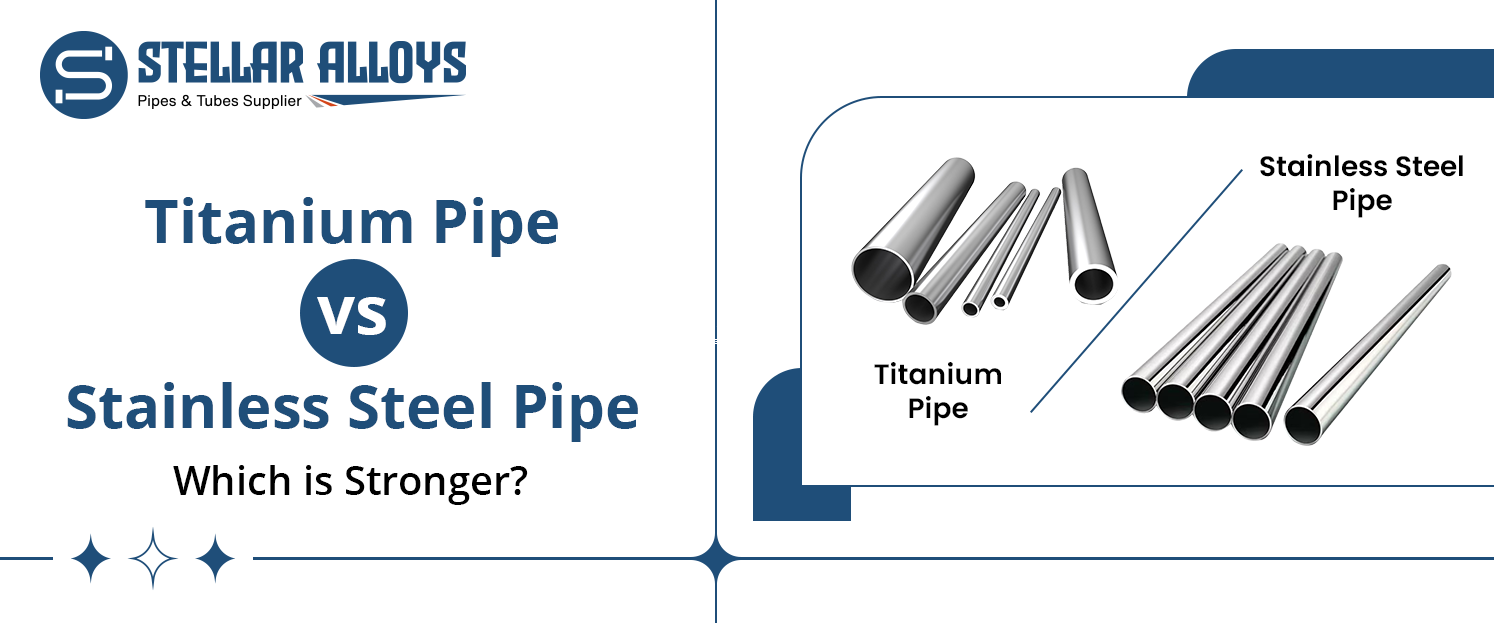
The most common question asked among the different industries in which is stronger, titanium or stainless steel pipe? The question is not so simple to answer, as it depends on what kind of strength you need in your application. Titanium is also characterized by its superior strength-weight ratio, being lightweight but strong, with some grades of stainless steel being able to match or even surpass titanium products in absolute tensile strength. When it comes to piping systems, other considerations such as pressure, weight, and resistance to corrosion also determine the correct selection. We will compare five major aspects in this blog and offer a clear selection guide to assist you in the selection of the best material.
What is Titanium Steel?
Titanium is a high-performance metal characterized by high strength-to-weight ratio, which is high strength and lightweight. It has excellent corrosion resistance particularly in a seawater and chemical environment, thus it is best suited in industrial applications such as aerospace, marine and in chemical processing industries. Titanium pipes are also common in situations where durability and weight are of great importance.
What is Stainless steel?
Stainless steel is a mixture of iron and chromium that contains chromium which creates a protective layer against corrosion. It is very popular in piping systems because it is strong, durable and cost-effective. The stainless steel is applicable in many types of industry because different grades such as 304, 316 and 904L provide different levels of corrosion resistance.
Titanium vs Stainless Steel Pipe: Quick Comparison
Property | Titanium Pipe | Stainless Steel (304/316) | Winner |
Tensile Strength | 900–1,100 MPa (Gr. 5) | 480–720 MPa | Titanium |
Strength-to-Weight | Excellent (4.43 g/cm^3) | Moderate (7.95 g/cm^3) | Titanium |
Corrosion Resistance | Superior (Seawater, Acids) | Good (Pits in Chlorides) | Titanium |
Absolute Hardness | Moderate | Higher (High-alloy grades) | Stainless Steel |
Cost per kg | $35 – $50+ | $1.50 – $3.00 | Stainless Steel |
Weldability | Requires Inert Atmosphere | Straightforward (TIG/MIG) | Stainless Steel |
Availability | Specialty (Long lead times) | Wide (Standard stock) | Stainless Steel |
Strength Comparison between Titanium Pipe vs Stainless Steel Pipe
In the case of titanium vs stainless steel pipe strength, it all depends on the kind of strength that we are referring to. In case of tensile strength, it should be admitted that the most powerful types of high-alloy stainless steels like duplex, super duplex, and precipitation-hardened grades provide 800–1,200 MPa of tensile strength, which may be equal or even higher than commercially pure titanium Grade 2 (around 880 MPa). Conversely, titanium alloy Ti-6Al-4V (Grade 5), e.g., has tensile strength of between 900 and 1,100 Mpa which is greater than 304 pipes and 316 stainless steel grades.
In terms of strength to weight ratio, titanium cannot be compared to stainless steel in any aspect. In fact, because titanium has a low density (4.43 g/cm 3 ) and that of stainless steel (7.9 g/cm 3 ), it is evident that the former is significantly lighter and, moreover, it does not lose its strength properties. Even better, titanium pipes and tubes have a higher resistance to fatigue meaning that they perform well even with different loads.
Titanium vs Stainless Steel Pipe Weight Comparison
In our comparison of the weight of the titanium and stainless steel weight, it is much lighter because it is not as dense (4.43 g/cm 3 ) as stainless steel (7.93-7.98 g/cm 3 ). This demonstrates the fact that titanium pipes have a weight of about 45 percent that of an equivalent size of stainless teel pipes hence are easy to handle, transport and install. This load benefit has special importance in the following industries; offshore platforms, aerospace, shipbuilding and medical systems, where a reduction of loads increases performance and efficiency. Titanium is more costly, but more expensive; however, in a critical application the weight gain can be worth the cost.
Corrosion Resistance of Titanium vs Stainless Steel Pipe
In many cases, corrosion performance is the determining factor between titanium and stainless steel pipes. Titanium has a natural self-repairing and tough oxide layer that resists seawater, chlorides and most acids and this allows it to withstand environments where corrosion is extremely vigorous without the use of coating or frequent maintenance. Comparatively, stainless steel is based on a protective coating made of chromium which is effective under normal conditions, but may disintegrate under hot and chloride-infested conditions, resulting in pitting and crevice corrosion problems. Although the better grades such as duplex or 904L are more resistant, they are more expensive. This is the reason why titanium is commonly recommended in applications that require a high level of performance such as marine and chemical exposures, with basic grades of stainless steel pipes proving an effective and economical option in less aggressive applications.
Cost Comparison Between Titanium vs Stainless Steel Pipe
The difference in cost between titanium and stainless steel pipes is not minor, but it depends on your cost evaluation. Titanium is significantly more costly (approximately $35 50+/kg) in terms of raw material than stainless steel ($1.50–$3/kg). The cost is also increased by fabrication, since titanium must be welded in an inert atmosphere (with argon shielding), and handled and machined more carefully. But the actual analysis is reduced to life-cycle cost. When used in very corrosive situations, titanium will last much longer and will not require any coating or constant upkeep, which can save money in total costs in 10-20 years. Conversely, in cases not as aggressive, the stainless steel is cheaper initially and thus the preferred option when there are general applications.
Application and Industrial Uses of Titanium and Stainless Steel Pipe
- Offshore Oil & Gas
The titanium pipe is commonly applied in offshore systems like seawater cooling, subsea pipelines, and firewater systems where saltwater corrosion is a primary issue of concern. Upstream and midstream operations are also performed with stainless steel, although in the less aggressive environments where the corrosion risk is minimal. - Chemical Processing
Titanium pipe is used in chemical industries, with acids and chloride-rich media where titanium is a preferred choice, particularly in pharmaceutical and API manufacturing. General process piping is typically done using stainless steel pipes in less corrosive and manageable conditions. - Desalination & Water Treatment
Titanium pipe works outstandingly in desalination plants by resisting corrosion in seawater and thus, it is ideal in long term use. Water treatment systems are made of stainless steel although it is primarily used in places where the exposure to corrosion is controlled. - Aerospace Applications
In aerospace, titanium pipe is employed in hydraulic and fuel lines due to its lightness and the strength. Here, stainless steel is not frequently employed because it is more weighty, and this aspect can affect performance. - Power Generation
Titanium finds application in power plant in condenser tubing and heat exchangers, particularly in the marine setting where corrosion is an issue. In less aggressive conditions, general plant piping is made of stainless steel. - General Industrial/ Construction Use
Due to its strength and affordability, stainless steel pipe is common in industrial process piping, HVAC systems, petrochemical plants and construction. Titanium is not prevalent here due to its high price, however where the corrosion resistance is crucial, then it is utilized.
How to Choose Between Titanium vs Stainless Steel Pipes
The correct choice is based on your usage, rather than what metal is stronger. Use titanium pipe when weight concerns or in systems with harsh environments such as seawater, high chlorides, or acids, such as in offshore, subsea or aerospace systems. It also takes sense when you require high service life and less maintenance.
Select stainless steel pipe when cost is the main consideration, and the environment is mild to moderate, e.g. water, steam and general industry. Such grades as 304 and 316L are inexpensive, fast to find, and ubiquitous.
If your requirement falls between these two, high-alloy stainless steels like duplex or 904L are a good option. They are cheaper than titanium and more resistant to corrosion than 316L, making them a viable middle-ground option. You can choose a reliable supplier like steelpipeandtubes, We provide high-quality titanium, stainless steel and other different types of pipes for different applications.
Frequently Asked Questions
It depends; some stainless steels can match or exceed titanium in absolute strength, but titanium is stronger for its weight.
Titanium costs more due to expensive raw material, complex processing, and specialized fabrication requirements.
Titanium is better because it offers superior resistance to seawater and chloride corrosion.
Yes, in mild environments, but in highly corrosive conditions, titanium is more reliable.
Common grades include Grade 2 (general corrosion resistance) and Grade 5 (high strength), used in chemical, marine, and aerospace industries.